Glass breakage insurance in Switzerland
Glass Breakage: A Complete Guide for Homeowners and Tenants

Glass Breakage: A Complete Guide for Homeowners and Tenants
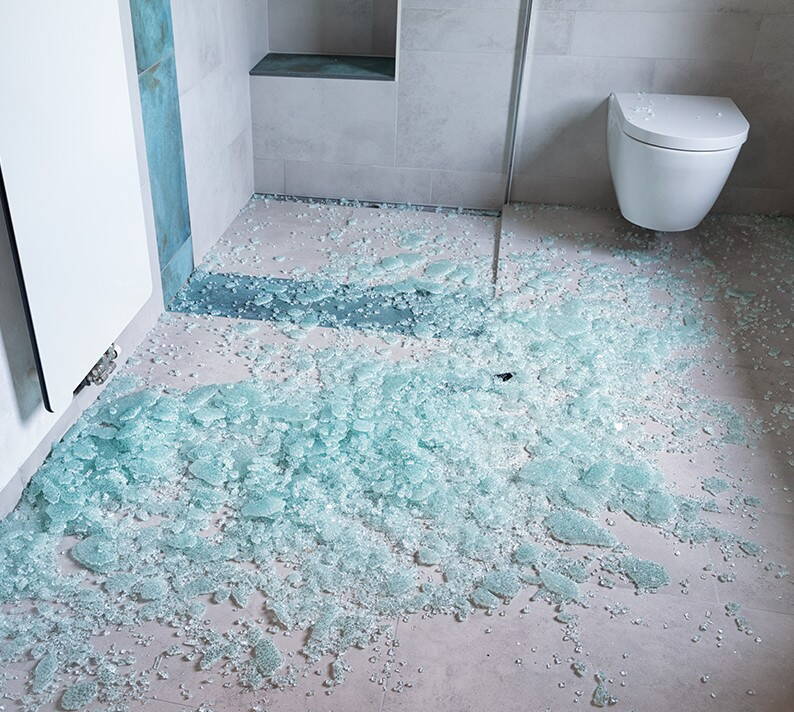
One mishap is all it takes to see your pride and joy shatter before your very eyes! What if you’re playing football with the kids, only for the ball to hit the neighbour’s window instead of the back of the net? And imagine the coffee machine falling straight onto your brand new glass table! In Switzerland, glass breakage is among the five most common claims in home contents insurance. But which type of insurance covers what kind of glass damage? And do you really need a separate glass breakage policy? Union Swiss Brokers Holding AG shows you how to make sure you and your home contents are properly covered – so you’re not left to pick up the pieces.
Glass breakage insurance is an optional form of supplementary cover that can be taken out as part of a home contents or building insurance policy. It covers breakage damage to glass objects caused by sudden, unforeseen events.
From an insurance perspective, glass breakage occurs when a pane of glass or glass object exhibits continuous damage extending from the front to the back. A simple crack or fissure that runs through the entire thickness of the glass is considered equivalent to a breakage.
However, the following are not insured:
Scratches, abrasions and superficial damage
Discolouration or cloudiness
Seal failure in insulating glazing
Wear and tear
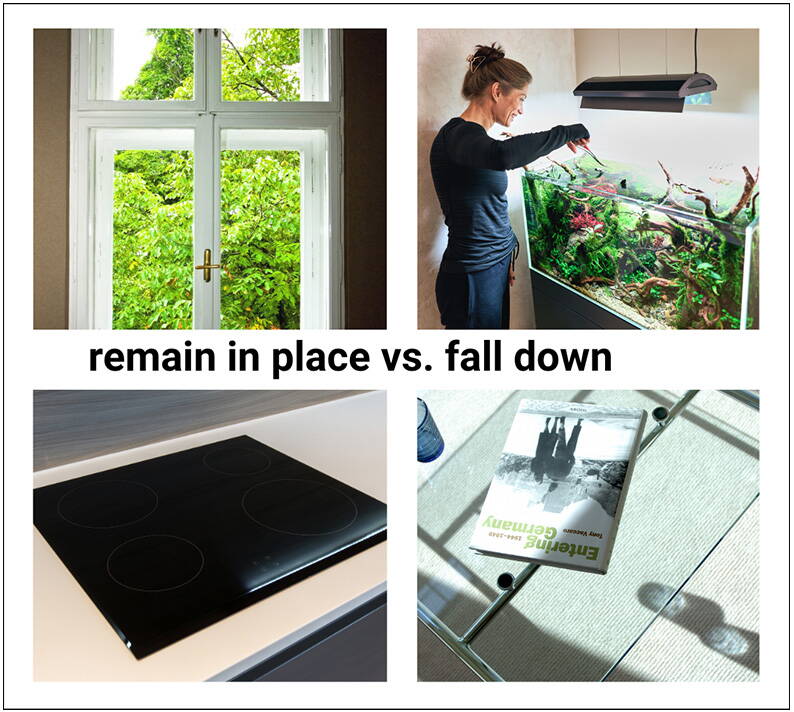
To understand which form of insurance covers your glass damage, you need to be able to distinguish between building and furniture glazing. For a generally foolproof way to tell the difference, try this: Imagine if your home were suddenly turned upside down. Everything that would fall belongs to furniture. Everything that would stay in place is building inventory.
Building glazing comprises all glass elements permanently attached to the building:
Glazing on structural installations: windows, glass doors, balcony and terrace doors, conservatories, bicycle shelters
Glass façades and wall cladding
Bathroom fixtures: washbasins, WC bowls made of glass, plastic, ceramic or porcelain
Glass ceramic hobs (ceramic hobs)
Kitchen worktops made of glass or natural stone
Dome skylights and roof glazing
Company signage and decorative glazing elements
Furniture glazing refers to movable objects made of glass:
Glass tables and table tops (including stone table tops)
Display cabinets and glass cupboards
Mirrors and glazed picture frames
Aquariums (depending on the type of cover)
Glass furniture and decorative items

As a property owner, you are obliged to insure your building. In addition to mandatory fire and natural hazard insurance, you are strongly advised to take out building glass insurance. This protects against damage to permanently installed glass elements such as window panes, washbasins and ceramic hobs.
Supplementary furniture glass cover is also worthwhile if you own valuable glass furniture such an expensive glass table, a high-quality display cabinet or a valuable aquarium.
For tenants, the situation is different: they do not need building glass insurance, as permanently installed elements belong to the landlord. A different form of insurance applies in this case – but we’ll come to that later.
However, tenants should bear in mind that private liability insurance provides cover against unintentional damage to the rented property. For example, if you accidentally damage the washbasin or the ceramic hob breaks, this would be classed as tenant’s damage, which is covered by liability insurance.
Note: Your landlord is not legally permitted to oblige you to take out glass breakage insurance as part of your rental agreement. However, a landlord may give preference to persons who have a policy like this when letting out their property.
For your own glass objects in your home – such as a glass table or display cabinet – home contents insurance with supplementary furniture glass cover is advisable.
The question of which type of insurance covers what depends on several factors:
Own property – self-inflicted
Furniture glass (glass tables, display cabinets, etc.): home contents insurance with supplementary glass breakage cover
Building glass (windows, washbasins) – as a homeowner: building glass insurance
Building glass – accidentally damaged as a tenant: private liability insurance
This refers to cases where you or a family member cause damage to the property of a third party. An example would be if your son smashes the neighbour’s window while playing football.
Private liability insurance covers this. It covers damage to third-party property, provided the damage was not caused intentionally. In our example above with your son and the neighbour’s window, instead of claiming against your glass breakage insurance, you would report the damage to your private liability insurance provider, which would pay for the window pane to be repaired.
When glass damage is caused by natural events, a different form of insurance applies:
Natural hazard insurance: for damage caused by storms, hail, flooding or lightning strikes
Fire insurance: for glass damage caused by fire or an explosion
These types of cover are included as standard in most home contents and building insurance policies, so supplementary glass breakage insurance is not required in these cases.
According to the Federal Statistical Office (FSO) 2024, there were 1.4 million owner-occupied households in Switzerland (representing 36% of all private households) and 2.4 million were tenant households. This distribution demonstrates the relevance of adequate insurance cover for different population groups
Glass breakage is among the most common causes of claims in Swiss home contents insurance. Besides theft and water damage, glass breakage is one of the most significant risks to which Swiss households are exposed. This underscores the importance of adequate insurance, particularly for households with many valuable glass elements such as windows, glass tables, display cabinets or high-end bathroom fixtures.
The household inventory index of the Swiss Insurance Association (SIA) (only available in German or French) provides annually updated benchmark values for the price trends of home contents in Switzerland and helps with the correct determination of insured amounts.
It’s important to know what glass breakage insurance does not cover. The following items are typically excluded:
Optical glass: spectacle lenses, microscopes, telescopes, binoculars
Hollow glass: vases, drinking glasses, terrariums, glass ornaments
Lighting fixtures: lamps, fluorescent tubes, light bulbs, neon tubes
Electronic devices: flat screens, projectors, desktop computers, tablets, e-book readers, mobile phones
Note: Some of these excluded items can be insured through accidental damage cover for home contents or supplementary accidental damage cover for electrical appliances. Further information on special types of cover is available from Comparis on their overview page for accidental damage cover in home contents insurance.
When you take out glass breakage insurance, you’ll usually agree on an excess. With most Swiss insurers, this is between CHF 200 and CHF 500.
A real-life example
A glass display cabinet worth CHF 150
A glass table worth CHF 800
Insured amount: CHF 1,000
Excess: CHF 200
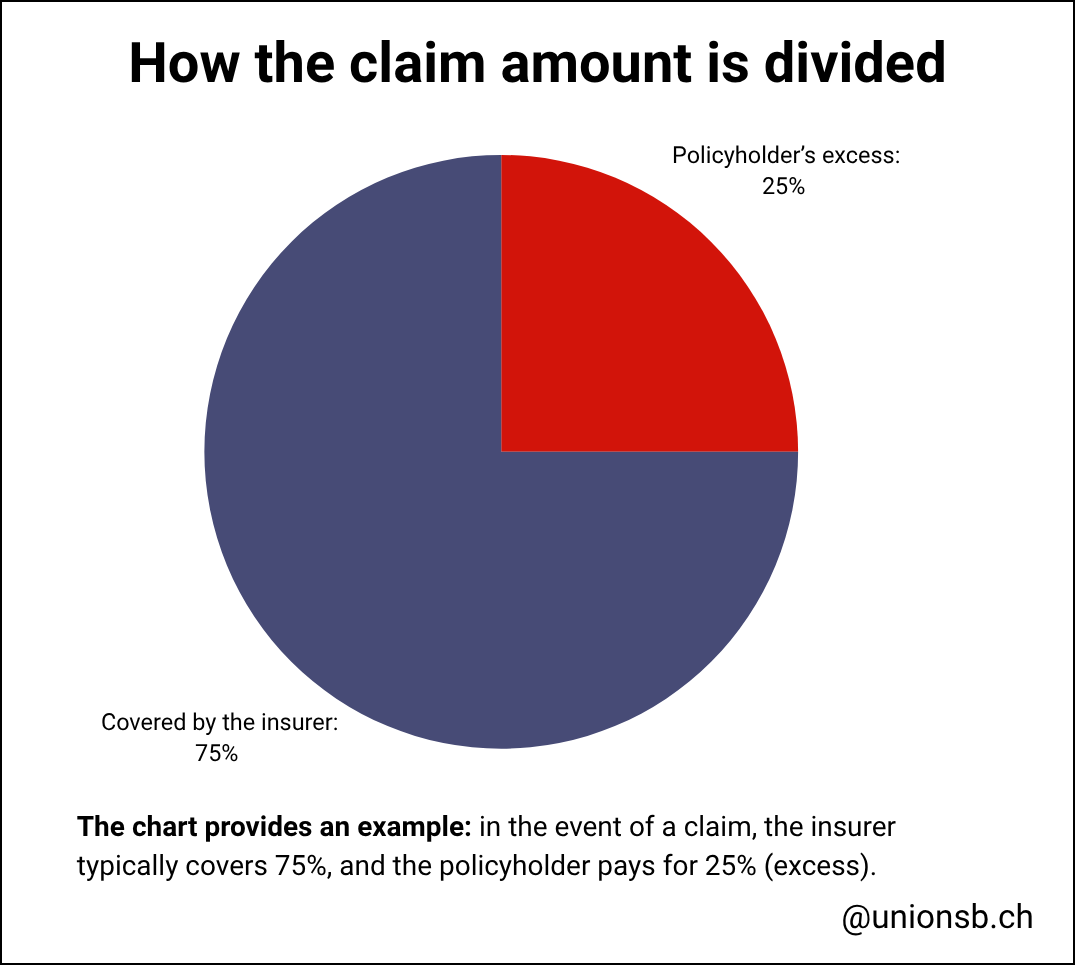
The display cabinet breaks → You replace it yourself, as the value is below the excess. The insurer pays nothing.
The glass table breaks → The insurer pays 800 – 200 = CHF 600. You pay CHF 200 out of your own pocket.
The choice of excess is a personal decision. The SIA recommends weighing up your excess against how often you expect to make a claim.
A common mistake is underinsurance. Many households underestimate the total value of their home contents. The FSO recommends an insured amount based on:
The square metreage of the property
The number of occupants
The standard of the furnishings
Whether any luxury goods are kept in the home
According to the SIA’s recommendations, you should review and adjust your insured amount on a regular basis. The SIA’s household inventory index provides annually updated benchmark values for the price trends of home contents in Switzerland. Detailed information on how to compile an inventory can also be found in the official FSO statistics on housing conditions.
In the event of underinsurance, the insurer will not pay the full damage amount – only a proportionate amount will be covered. For example, if you’ve insured 80% of your home contents, your insurer will also only pay 80% of the damage in the event of a claim – even if this is below the insured amount.
Review your current policy: many Swiss people are surprised that their home contents insurance already covers glass breakage – they simply need to file their claim with their insurer!
Document your items: Create a list with photographs of valuable glass objects (display cabinets, tables, ornaments). This makes it easier to settle claims.
Choose the right excess: A higher excess (e.g. CHF 500) leads to lower premiums. This is worthwhile if you don’t expect to claim much glass damage.
Make regular adjustments: Update your insured amount whenever you acquire a new expensive glass object or renew your furnishings.
Compare offers: Coverage scopes and premiums differ considerably from one provider to another. Conditions vary particularly for ceramic hobs, aquariums and bathroom ceramics.
Before taking out or renewing glass breakage insurance, you should check these points:
Is furniture glass and/or building glass included?
Are bathroom ceramics (washbasins, WC bowls) covered?
Is your glass ceramic hob (ceramic hob) included?
What excess is agreed?
How high is the insured amount?
Is optical glass excluded?
Can you insure additional objects such as aquariums?
Does the insurance also apply to transport damage?
Important: The exact benefits will be regulated in the General Conditions of Insurance (GCI). It is best to read these carefully or have an expert explain them to you.
Glass breakage insurance is not an absolute necessity, but it makes sense in the following situations:
If you have a large number of glass objects in your house or flat
If you own high-end glass furniture or ornaments
If you are a homeowner and have a lot of glazing (large windows, conservatory)
If you want to minimise the risk of repair costs
For the average household, a simple calculation is often enough: If glass damage occurs very rarely in your home (every 5 to 10 years), it may not be worth taking out a policy. Instead, you can save the money you would otherwise spend on annual insurance premiums and use it to pay for any damage yourself as and when it occurs.
As an insurance broker in Switzerland, Union Swiss Brokers Holding AG recommends that you analyse your situation honestly and compare several quotes. You can always request professional, independent advice whenever you need it.
Not every glass-related damage is automatically covered by your current insurance policy. Our experts can help you identify potential coverage gaps and find the solution that best matches your needs. Learn more about our Insurance Solutions for Private Individuals here.
Is glass breakage insurance mandatory in Switzerland?
No. Glass breakage insurance is an optional additional cover that can be included, depending on the insurer, as part of household insurance or building insurance.
What types of glass damage are covered?
Glass breakage insurance generally covers breakage damage to insured glass surfaces and glass elements. The specific items covered depend on the terms of the individual insurance policy.
Who pays for a broken window in a rented apartment?
If a tenant accidentally damages a window, private liability insurance will often cover the resulting tenant damage. The exact scope of coverage depends on the insurance policy.
Are ceramic cooktops and washbasins covered?
Depending on the insurance product, ceramic cooktops, washbasins, toilets and other sanitary installations may be covered under the relevant glass breakage protection.
Does glass breakage insurance cover scratches or wear and tear?
No. Scratches, superficial damage, wear and tear, and normal deterioration are generally not considered glass breakage and are therefore not covered.
Do I need glass breakage insurance as a tenant?
That depends on your living situation, existing insurance cover and the insured items. Glass breakage cover may be useful, for example, for furniture glazing or certain types of glass damage in a rented property. The actual scope of cover depends on the individual insurance policy.
How high is the deductible for glass breakage insurance?
The deductible depends on the specific insurance policy and insurance model. The amount is stated in the policy documentation.
Is glass damage caused by hail or storms covered?
Damage to insured glass surfaces caused by hail, storms or other natural events generally falls under natural hazard coverage rather than standard glass breakage insurance. You can find more information in our article on the simple handling of hail and storm damage claims.
Editorial note: This article was originally published on 4 November 2025 and was reviewed and updated in September 2026.
)
)
)
)
)
)
)
